Ricochets of a Life: The Art of Anna Maria Maiolino

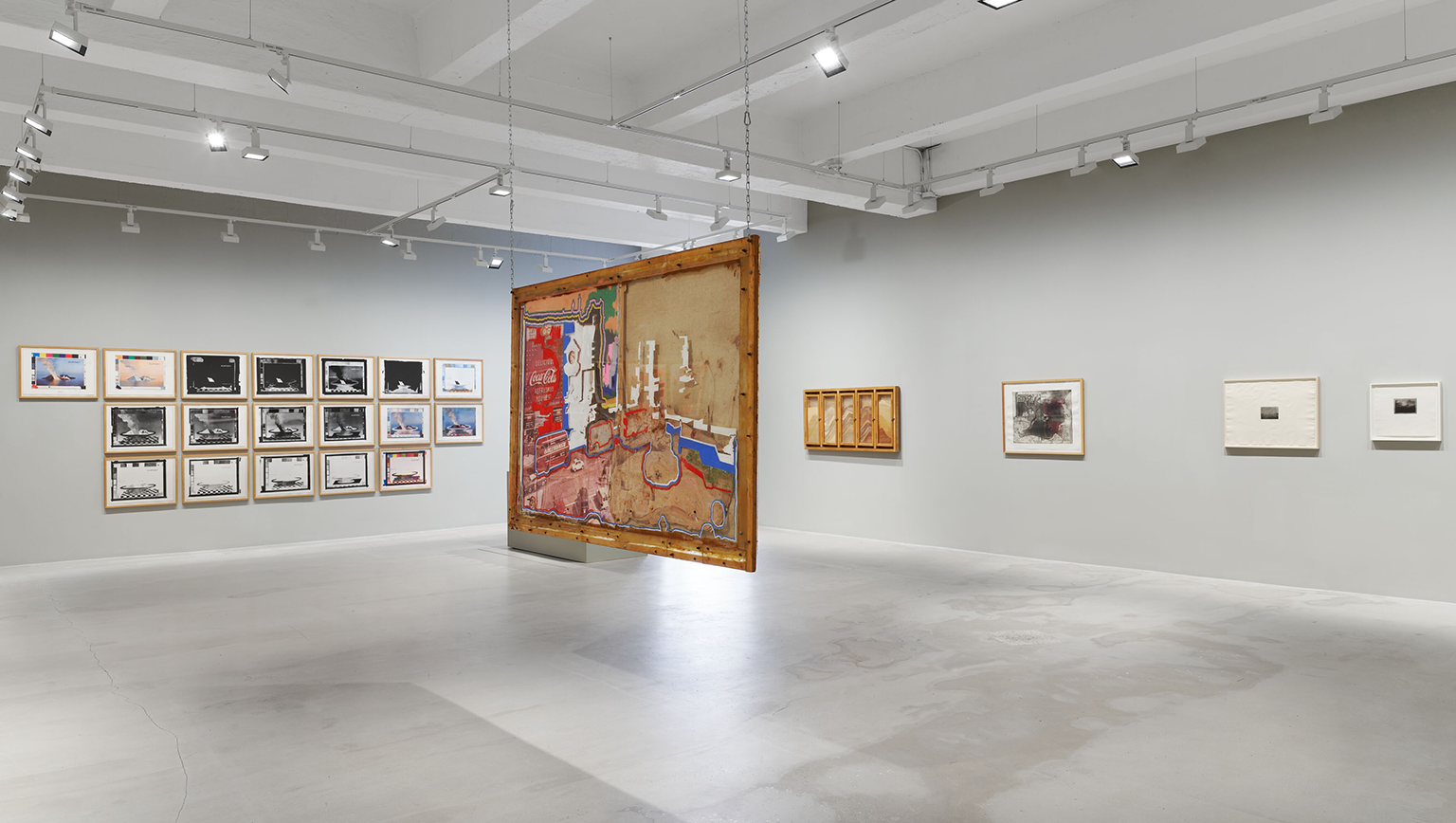
Located in the airy and light Musée National Picasso-Paris, Je suis là / Estou aqui was the first comprehensive French exhibition of Brazilian artist Anna Maria Maiolino's work. Imbued with the chronology of Maiolino’s life, the exhibition was the perfect way to celebrate Brazilian heritage and cultural liaison with France during Brazil's cultural heritage season in the Parisian city. Curated by Fernanda Brenner and Sébastian Delot, the presentation showcased the artist’s work in six dedicated chapters: Introduction, Between Meaning, Storm of Ideas, In Principle, New Landscapes, and Ricochets.

Introduction gave insight into the artist’s early origins, her multi-cultural heritage, and nomadic development years. Anna Maria Maiolino was born on 20 May in the village of Scalea, Italy, in 1942 to an Italian father and an Ecuadorian mother. In 1948, the family moved to Bari, in the Apulia region. The youngest of ten children, she recalled happy childhood memories of boisterous family mealtimes. That was, she said, her first university. Soon afterwards, Maiolino and her family emigrated to Venezuela. Then aged 12, Anna Maria continued her schooling without speaking Spanish. This was when she had her first painting lessons and discovered the works of the Venezuelan artist Armando Reverón.

The Venezuelan period was essential to understanding Maiolino’s early influences and education. Training at the Cristóbal Rojas National School of Fine Arts in Caracas, she finally left the city permanently in 1960, when she and her family moved to Rio de Janeiro, Brazil. By moving to so many places in a short period of time, the artist had found it difficult to connect through the traditional form of communication, language. Therefore, Maiolino found solace in art where she could express herself without restriction. The curation stated, “Her experience navigating between languages, cultures, and political realities infused her work with a profound understanding of belonging that speaks eloquently to our age of global migration.”

For those unfamiliar with her story, the schisms of her identity were formulated in this period, but eventually found a home in Brazil. Undeniably impacting her identity and work, Brazil became her home and muse. The artist, who was awarded the Golden Lion at the 2024 Venice Biennale for her oeuvre, dedicated her award to "Brazilian art, to the country that welcomed me." Though born in Italy, she identified resolutely as Brazilian, her artistic vision flourishing within Brazil's dynamic cultural terrain. Delot and Brenner’s research articulated that the artist continued her artistic studies at the National School of Fine Arts in Rio, notably taking courses in painting with Henrique Cavalleiro and woodcut printing with Adir Botelho.

At the same time, she attended Ivan Serpa's aesthetics courses at the Museum of Modern Art where she acquainted herself with Antonio Dias, Roberto Magalhães, and Rubens Gerchman, joining them in the group now recognized as the Nova Figuração [New Figuration] movement. She solidified her place when she became one of the signatories of the Declaração de princípios básicos da vanguarda [Declaration of the Fundamental Principles of the Avant-Garde] alongside the other artists. Maiolino went on to marry Gerchman and have two children with him, which also provided the basis for confronting themes pertaining to motherhood and confinement.

She was also notable for her Entre Pausas drawings, which Maiolino created as a young mother navigating the turmoil of New York without knowing English. “In 1968, the military dictatorship suspended most civil rights and drastically increased the level of repression, so Maiolino obtained Brazilian citizenship and took advantage of the opportunity offered to her husband to move to New York's Bowery neighbourhood. Although Maiolino devoted most of her time to household chores, she nevertheless followed Hélio Oiticica's advice and began to draw illustrations and write texts and poems. Her notes became the basis of Super 8 films, as well as the series Mapas Mentais [Mental Maps], in which the sheet of paper became a ‘place’ where she constructed an emotional cartography based on autobiographical elements,” the curation confirmed. From an unrestrained emale lens, her films and sketches during this period relayed the implications of being boxed into the domestic realm.

Just like navigating multiple languages, countries, and identities, Maiolino was able to adapt to different artistic mediums with ease. Demonstrating the range of her talents, her oeuvre spanned printmaking, drawing, film, photography, performance, and sculpture. A recurring theme was that Maiolino would pick up a new medium after leaving a relationship. Following in the Brazilian concrete poets' tradition of the artist's book as a space for graphic experimentation, paper became her chosen medium after separating from her husband and leaving New York for Brazil with her children. The trappings and joys of motherhood were a language that crossed typical cultural boundaries.

When linked to her adopted city, the references were clear. “Throughout her career, Maiolino was influenced by the woodcut tradition of northeast Brazil, which is closely linked to the popular cordel folk literature. She focused on domestic space and human existence, food, birth and death. The most famous work in this series was undoubtedly the figure of Glu Glu Glu or ANNA sitting at a table with an open mouth.”

The section titled Between Meaning advocated for the space between displacement and belonging. "When you move between so many places, so many identities," she reflected, "you learn to distinguish what is truly yours from what you have accumulated along the way. Each time I returned to a gesture, a material, it was different." Many artists were deeply tied to their roots and identities and that was clear in their work. It was the way they filtered their surroundings and believed in finding their truer self.

But with Maiolino, despite her immense pride in Brazil, she remained firmly open to new identities, rather than digging her heels into the possibility of being a mutt of many things. Therefore, by extension, her work constantly wanted to reinvent itself, whether through the medium or through its meaning at a given point in her life. It made sense that her work was displayed in a museum dedicated to Picasso, who was known for his several reinventions of the self. This constant experimentation was vital to understanding both their work. In Between Meaning, the curators provided context by giving examples of her work that confronted this strange no man’s land. “Her migration from post-war Italy to politically unstable South America engendered an enduring fascination with identity. In the early 1980s, her most famous performance Entrevidas (Between Lives), walking blindfolded among scattered eggs, became a powerful metaphor for survival during Brazil's military dictatorship. The chronology provided on her life painted a picture of this terrifying moment in Brazilian history. In 1964, there was a military coup d'état supported by the industrial bourgeoisie and the USA. President-elect João Goulart was ousted. The dictatorship lasted for nearly twenty-one years. Torture, persecution and the abduction of opponents became the regime's modus operandi.”

In the section Storm of Ideas, the exhibition highlighted the stems of Maiolino’s artistic process. It emphasised that Maiolino always returned to language as a form of opening her mind to new revelations and confronting barriers that barred her from them. The resonant theme of language, and the difficulty of assimilation into new cultural identity, echoed throughout the collection. Here Brenner and Delot provided the metaphor of language for how the artist caught ideas and translated them. “Maiolino approached drawing as one might approach a foreign language, as an act of exploration. For her, drawing was not merely a visual exercise but a method to decelerate thought, deepening reflection through a step-by-step construction of meaning. Presented here for the first time, her series Tempête d'idées (Storm of Ideas) took the form of brief visual notes that documented ideas, future projects, observations of nature, and abstracted spatial representations. These joyful, dancing forms and schematic lines populated the paper before being translated into various projects and artworks beyond the page.”

This section was fascinating because it provided an insight into unfinished ideas and work not often displayed alongside finished pieces. It revealed the fascinating process through which Maiolino found the frazzled clues within her imagination to pinpoint a larger idea that she might have pursued. Excavating these elements was a form of exploration and discovery for Maiolino to find the exact vocabulary for expressing her state of mind. The curation supported this by noting, “The sheet became a temporal framework where Maiolino relied not on words but on free, expressive lines to access her narrative. Her methodology embraced the tension between intuition and analysis, knowing without seeing, seeing without knowing. Through this visual thinking process, Maiolino developed concepts that later materialized across her diverse practice.”

Visitors were given a direct opportunity to view this diverse practice by interacting within the three-dimensional space of her clay works in the area dedicated as In Principle. In the site-specific installation, clay provided the basis by which to confront the practice of repetition. The curation pointed out that “Since the early 1980s, Maiolino had worked with malleable materials in her Terra Modelada [Modelled Earth] series, where clay bore the imprint of unconscious gestures and daily rituals. She tirelessly reproduced primordial gestures, kneading, stretching, cutting, rolling, and compacting. From this ritual emerged what she called ‘the law of series, the law of repetition,’ expressing her fundamental concern with creative and destructive processes.”

Viewing these seemingly endless clay works felt reminiscent of watching cells replicate under a microscope. When moving closer to them, visitors could get lost in a sea of imprinted clay vessels, which when viewed from the back of the room united like one moving body. “Maiolino focused on making visible the repetition of gestures, markers and triggers of everyday alienation, using raw, unbaked clay for temporary installations,” the accompanying text read.

It was evident that the curators and the artist wanted visitors to feel connected to the clay works in a sensory experience that recalled memory whether through olfactory or textural processing. They proclaimed that “Through this process, Maiolino offered viewers a lesson in deep listening and attentive looking. Intuitively, Maiolino recognized how clay allowed her to access collective memory beyond individual limits, repeating ancient gestures that transformed clay into a living language. In this particular installation, clay was worked and left to dry, with forms and ranges according to a spatial logic unique to this environment.”

It was interesting that Maiolino chose to pick the medium of clay after separating from her partner at the time, Argentinean artist Victor Grippo, catalyzing a new chapter of exploration and liberation. It also marked her return and settlement in Rio, the place she felt intrinsically linked to. Her first clay installation was presented at the Kanaal Art Foundation in Belgium, curated by Catherine De Zegher, focusing on contemporary women artists.

New Landscapes showcased Maiolino's sculpture-objects, which began in the late 1980s. She used the process of moulding to create these pieces in a three-stage process. The exhibition informed viewers of the creation process step by step by sharing that, “First she modelled a form in clay, then covered this form with liquid plaster to create a mold that would contain the final shape, and finally removed the original clay once the plaster dried, leaving hollow walls treated with insulating liquid that would receive plaster or cement mortar.”

The finished sculpture emerged after the mold was broken once the internal material had dried. Some works highlighted their raw materials, plaster and cement, while others revealed surfaces transformed through oil painting techniques. These sculptures emerged from tactile experiences of hand-shaping clay, intrinsically referencing genesis, geological formation, and primordial territories. By connecting with ancient cultures and earth art, they transcended explanatory discourses of modern art, reaffirming that reconnection with the past and its primordial energy provided invaluable resources for formal and material experimentation. Her work liberated abstraction from Minimalism's constraints, bringing it back into the service of the active, desiring body.

In the final section, Ricochets, Maiolino called upon the word to point to the phenomenon of rebounding off of objects as a metaphor for the culmination of her ideas found in different mediums bouncing off of one another. From paintings to wooden reliefs to experimental drawings, she brought together a collection of projects that expressed concentrated ideology. In this interwoven gesture, she hoped that, like learning a new language or culture, everyone would take away a tidbit of something they understood, no matter the form or scale. This part of the exhibition concluded that “In its material density, her work bore witness to history, bringing memories of the past to the surface through new interpretations, relentlessly exploring subjectivity and self.”

From the Gwangju Biennale in South Korea to dOCUMENTA in Kassel, Germany, Maiolino’s work was shown at exhibitions and stagings around the world. By joining the international gallery Hauser & Wirth in the early 2010s, her work expanded to larger stages. Although her first retrospective Entre Muitos, held at the Pinacoteca do Estado de São Paulo, was curated by Paulo Venâncio Filho, female curators like Helena Tatay at the Antonio Tàpies Foundation were instrumental in recognizing her oeuvre up to this point. In 2017, a major exhibition was dedicated to her at the Museum of Contemporary Art in Los Angeles, curated by Helen Molesworth. In 2019, the Padiglione d'Arte Contemporanea (PAC) in Milan offered her a first retrospective in her homeland. The exhibition was then shown at the Whitechapel Gallery in London.

But despite the praise, Maiolino had no interest in presenting this exhibition as a retrospective of her work. “This is not a retrospective," Maiolino insisted. "The title Je suis là / Estou aqui affirms that I am still here, still working, still engaged in vital dialogue." But for a female artist who had been severely underrated, Je suis là / Estou aqui could very well be seen as at least a dedication to her decades-long career so far. This exhibition was one of the few times such an array of the artist’s work was displayed at this scale.

So while Maiolino may not have identified with the word retrospective, it was important to note the achievement in highlighting an underappreciated artist in this grand measure. By hosting this exhibition, the Picasso Museum aimed to “illuminate Maiolino's enduring contribution to contemporary art, a testament to how attention to material, body, and daily life became an act of political resistance, reclaiming creative agency in the face of historical and social constraints.”

Due to the nature of showcasing in the Picasso Museum, the exhibition was bound to bring up parallels between the host and visiting artist. Within Picasso's museum, her work engaged in a resonant dialogue through their shared Mediterranean heritage and formal investigations. Both artists used their practice to critique military oppression, in Picasso's case the Spanish Civil War (La Guernica was considered one of the greatest anti-war paintings of all time) and in Maiolino’s Brazilian dictatorship. Maiolino herself described this period: "Political repression made artistic creation almost impossible. It was like constantly living with a shadow overhead, the threat that every creative gesture could be interpreted as a political stance."

But while Picasso was known for his masculinity and turbulent relationships throughout his many periods, Maiolino's story held contrasts, despite any similarities drawn between the two’s heritage or thematics. The curation drew this line when informing us that "Her work fundamentally reconfigured the feminine subject not as object of representation but as authoritative source of formal innovation.” While both artists explored elemental vocabularies of form, Maiolino introduced a perspective distinctly informed by her experiences as a woman artist and female evolution in society.

Maiolino’s distinct vision of both her inner and outer world cements her legacy as a woman who has managed to create a career by utilizing a variety of mediums to engage with political turmoil, societal movements, and personal strife pertinant to that of being a woman in migration. Her lens speaks to mothers and daughters, wives and partners, in ways the works of other male counterparts do not. That distinction was valued in the context of its showing, as it importantly was here.

Visit Musée National Picasso-Paris:

Links to Profile:

Anna Maria Maiolino:

Read More

Temple of Love: A Day of Rick Owens' in Paris

Chiara Padejka • September 18, 2025 •
7 min read

Armory Show 2025

Creativo’s Top Picks from Armory Show 2025

Abigail MacFadden • September 4, 2025 •
5 min read

Read More

Temple of Love: A Day of Rick Owens' in Paris

Chiara Padejka • September 18, 2025 •
7 min read

Armory Show 2025

Creativo’s Top Picks from Armory Show 2025

Abigail MacFadden • September 4, 2025 •
5 min read

Labubu and the Logic of Hype: What a Monster Toy Says About Us

Chiara Padejka • August 18, 2025 •
6 min read

Sun’s Out, Shoes Out: The Summer Shoe Edit

Chiara Padejka • August 15, 2025 •
6 min read

Guild Hall: A Cultural Renaissance in East Hampton

Chiara Padejka • July 31, 2025 •
5 min read

The Blindfolded Doctor: Jon Tsoi’s Powerful Approach to Art

Tessa Almond • July 23, 2025 •
5 min read

Amy Sillman at Dia Bridgehampton: An Innovative Take on Site-Specific Art

Abigail MacFadden • July 8, 2025 •
6 min read

Guild Hall: A Cultural Renaissance in East Hampton

Abigail MacFadden • July 3, 2025 •
6 min read

The Politics of Punk and Plaid

Tessa Almond • July 2, 2025 •
7 min read

Inside the Mosaic Tile House: L.A.’s Most Unique Art Attraction

Chiara Padejka • June 27, 2025 •
6 min read

Phoenix: Cloe Galasso’s Rebirth into the Art World

Abigail MacFadden • June 17, 2025 •
6 min read

The Immortal Bouquets of Anna Volkova: The Master of Porcelain

Chiara Padejka • June 11, 2025 •
5 min read
Whispers Across Time: Urhobo + Abstraction

Chiara Padejka • June 3, 2025 •
5 min read
Draped in Defiance: The Radical Elegance of Black Dandyism

Chiara Padejka • May 26, 2025 •
7min read
Marie Chloe Duval: I want to learn about you with my eyes closed

Abigail MacFadden •May 23, 2025 •
6 min read

TEFAF Recap: Four Favorites

Chiara Pdejka • May 12, 2025 •
5min read

Frieze New York 2025: The Perfect Balance

Abigail MacFadden • May 11, 2025 •
5 min read
The Power of Purpose: Building Creative Brands with Integrity that Scale

Abigail MacFadden • May 10, 2025 •
5min read
Superfine : A Night of Black Style and Menswear

Chiara Padejka •May 9, 2025 •
7min read
An American in Paris: Sargent Takes the MET

Chiara Padejka • April 30, 2025 •
5min read
Segreti Dei Medici: An Italian Style Guide

Abigail MacFadden •April 29, 2025 •
5min read
The Frick Reopens: The Must-See Museum for Spring

Chiara Padejka •April 24, 2025 •
7 min read
Weaving Space: Identity, Memory, and Resilience in the Art of Qinza Najm

Abigail MacFadden •April 21, 2025 •
6min read

Together We Art Fair: A Celebration of Interconnectivity in New York

Abigail MacFadden •April 14, 2025 •
6 min read
Grace Chen: china's power dresser blending east and west

Abigail MacFadden •April 11, 2025 •
5min read
Sculpting Dreams in Silk: The Couture of Sohee Park

Chiara Padejka • March 31, 2025 •
5min read
Dieter Roth. Islandscapes shines at Hauser & Wirth during IFPDA week

Abigail MacFadden •March 26, 2025 •
5min read
Who is the Gong Girl? Mark Gong’s Global Muse

Chiara Padejka • March 25, 2025 •
5min read
Rhyme with Reason: Irish Tapestry Studio puts Sustainability First

Chiara Padejka •March 19, 2025 •
6 min read
WAX: The African Fabric at the Heart of Fashion and Art

Lara Sleiman •March 18, 2025 •
5min read
Person Place Thing : The Building Blocks

Chiara Padejka •March 14, 2025 •
5 min read
Colombian Magic at Nohra Haime Gallery

Abigail MacFadden • March 7, 2025 •
5min read
Beyond the Box: Tiffany Lamps and the Legacy of Artistry

Chiara Padejka •March 6, 2025 •
4min read
Tess Azcuna: Bridging Worlds in Entertainment, Fashion, and Business

Abigail MarcFadden •March 4, 2025 •
4min read
Maria Paula Suarez: The Alchemy of Emotion

Abigail MacFadden • March 4, 2025 •
5min read
Felix Art Fair: An Intimate Art Experience at the Roosevelt Hotel

Sasha Bernier • February 26, 2025 •
5min read
Stories Unfolding: A Tapestry of Narratives at Art Gotham

Abigail MacFadden • February 24, 2025 •
5min read
Standout Showcases: Six Must-See Galleries at Frieze Los Angeles 2025

Abigail MacFadden • February 23, 2025 •
6min read
Author